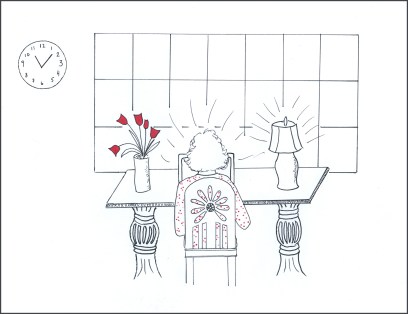
 I used to think writers only wrote when they felt inspired. Somehow, I thought writing a book must be an amalgamation of lots of consecutive brilliant moments that somehow came out just the way they appear in the final version, or at least something very similar. I thought this was the case in all the arts really. This is a very convenient thought for someone, such as myself at the time, looking for an excuse to not write. I wasn’t in the mood. The chair was uncomfortable. I didn’t feel inspired. I mean, I did say that the chair was uncomfortable, right?
Right.
My great-grandfather was an author of thirty some-odd books. He wrote in his memoir that being a writer meant putting your bottom on a chair and writing every day, or at least regularly. This is very inconvenient for someone with little time to write. I decided I would rather wait for the inspirational approach to writing. (He really did use the word “bottom” by the way.)
I didn’t get very far. Maybe once a year or so I’d have some brilliant set of ideas for my story and I’d go write them down. But then, nothing more would happen. A book was not just going to grow over night because I had some supposedly great idea. I had to actually write it.
So, eventually I committed to write on weekends. All weekend, every weekend. I’d start every Saturday taking a painfully long time trying to pick up where I left off the previous weekend. (This would be interrupted by frequent coffee refills, FaceBook updates, and spontaneous decisions to do something more productive, like fold laundry.) It was a head-banging slog. I was getting nowhere, and when Monday rolled around, I was exhausted.
So, I decided to restructure my writing schedule so that I accomplished a cumulative ten hours of work a week, broken down with a formula so that most days of the week I was working on it, even just a little bit. (I actually call it “Edie time,” named for my main character, because, really, a lot more goes into producing a book than just writing it.)
This goal was much more attainable, but, for a long time it was hard to shift from my corporate “hat” to my writer “hat.” There were too many spreadsheets, team meetings and status reports in my head. (Remember TPS Reports?) Yet, once I had broken down the hours into manageable daily sessions and learned to plant seeds for the next day, it became easier and easier. I could even imagine and write scenes down at lunch in my company cafeteria after a team meeting!
What do I mean by planting seeds? Research, outlining and storyboarding, which germinate into, what I call, “inhabiting” the story. The more regularly I worked on research for the book, which included everything from the international affairs behind the espionage to the details of life in a different era and country, the more of top of mind the story was. I would live my life, carrying around in my mind the ripe ingredients for the story, and at any moment I could pretend I was in the world of my characters. Then, as ideas came up, I would put them on a white board and string them together, filling in or erasing links as necessary. I realized that being creative was like a muscle that once conditioned, becomes stronger. Whenever I did, after all that germination, sit down and write, it came slipping right out. Not once did I have a writer’s block after that.
Now, that doesn’t mean that everything I wrote was great. A lot of it wasn’t. Maybe this isn’t even any good. But, part of the discipline of creativity is the development of craft, which includes understanding the value of drafts (and mistakes!), letting go of your ego enough to listen to criticism, and to cut or revise work you spent ages on. The more you work on it, and the more open you are, the better it gets.
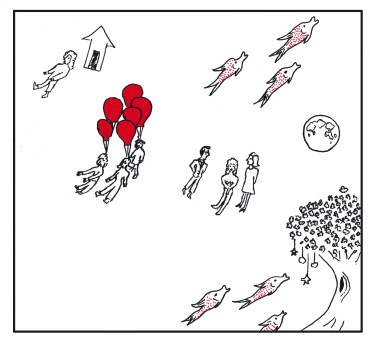 As a writer, I am frequently asked, “How do you come up with the ideas for your stories?” That seems like a pretty straightforward question, which is usually followed with, “Where do your characters come from? Are they based off of real people? Is your main character really you?” I can provide a well-rehearsed response about the inspirations for my stories and characters, and no, while there are similarities, they are certainly not based on me, my life, or anybody else’s whom I know. I made them all up.
 hilaryzerbst.com